
Deliberate Lag
Resisting a culture of immediacy through meaningful latency

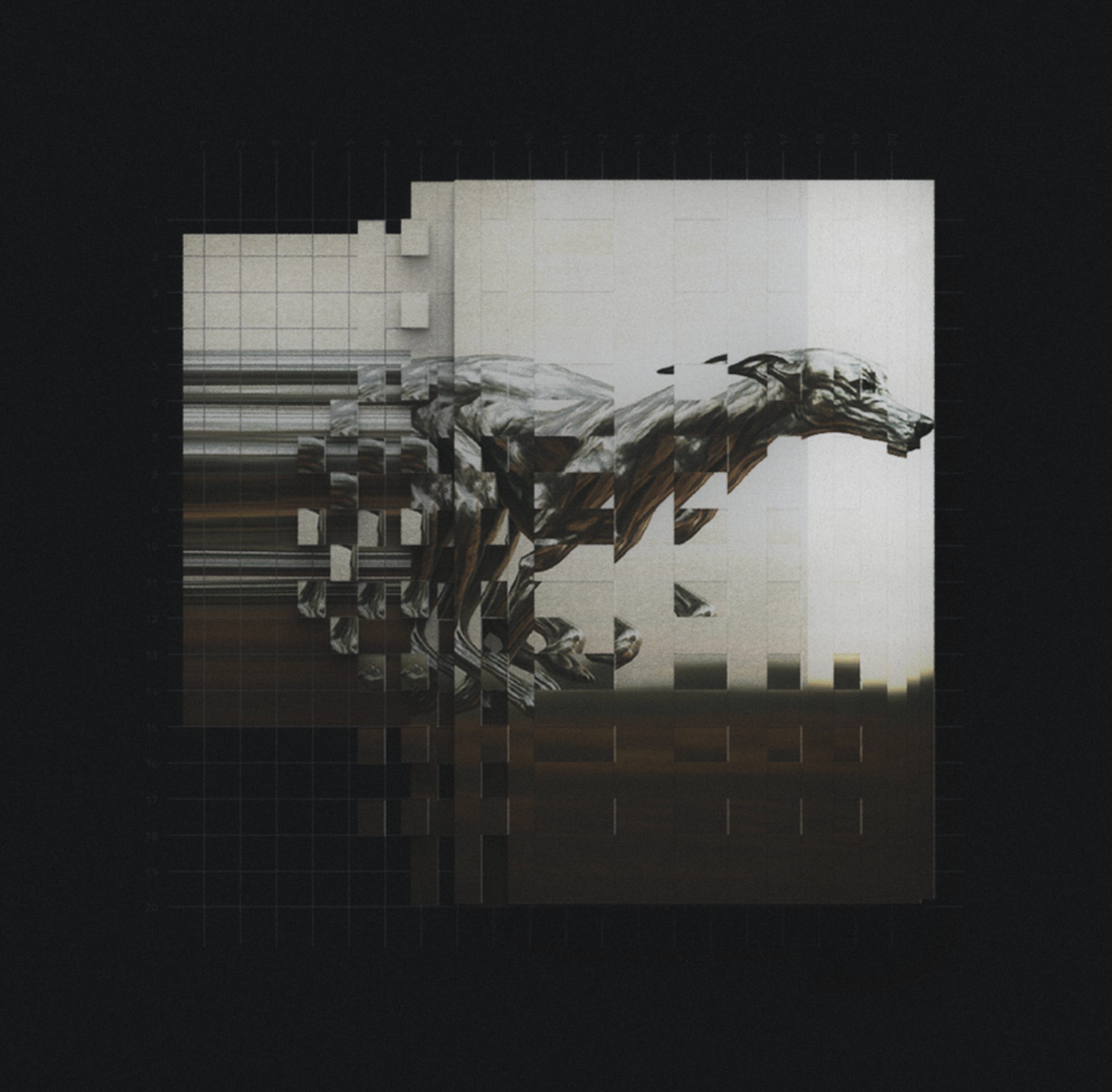
Lag is a term that inherently implies failure, almost always carrying a negative connotation. Frustration arises when we lag out of games. We dread the inconvenience of jetlag. To be a laggard is to forever fall behind. We’ve spent decades shaving milliseconds off of load times, seeking to destroy delay from our screens, our networks, and our lives. But is it something we should really seek to erase entirely?
Our relationship with technology relentlessly pursues a frictionless future, our manifest destiny of the information age. Heuristics have been hardcoded into dogma as we’ve become zealots marching righteously towards convenience and seamlessness. But inevitably, all roads lead to the iPad baby.
“Don’t make me think” has given way to “I don’t want to think ever again.”
Accelerating towards this future exacerbates our postmodern malaise. Capitalism instantly metabolizes emergent cultures into pastiche, and information overload fragments our comprehension. Nowadays, novelty collapses into noise before it can even be named. No wonder we endlessly oscillate between “it’s so over” and “we’re so back” after every refresh.
Frictionlessness begets speed; speed begets compression; and inevitably, compression begets the loss of meaning. Virilio called it dromology, “the logic of speed.” He argues that this increasing momentum reshapes our relationship to space, time, and meaning. As everything speeds up, distance collapses, creating a world dominated by immediacy. The attention economy fucking hates waiting.
Seamlessness hyperfixates on immediacy, treating latency and lag as excess fat to lop off the body. Long-form stories devolve into short-form slop. Video jump cuts multiply, turning stories into stutters and punctuations into palpitations. Even the millennial pause feels unbearable. We are coerced into binaries. The time is either now or never, as we’re forever trapped in an endless waltz of the present.
We’ve demonized lag as an undesirable artifact.
Two decades ago, digital and analog identities had distinct boundaries. We logged on deliberately; logging off allowed meaningful latency between worlds.
We went inside. We logged in. We logged off. We went outside.
Now we’re perpetually inside out, simultaneously bound to digital immediacy yet tethered to physical reality. Humans require friction. We need intervals of latency to metabolize and comprehend meaning.
Byung-Chul Han, in Saving Beauty, argues for beauty as a lingering presence resistant to immediacy. Beauty demands contemplation, pause, and friction. Yet we have a fetish for seamlessness and, in turn, smoothness. Smooth bodies. Smooth devices. Smooth interfaces. Our craving for comfort leaves us unable to derive meaning. We demand to fill every inch of silence with elevator music—an endless loop of unmemorable sounds neither ugly nor beautiful, only slightly more tolerable than noise. And somehow we’ve learned to prefer that over the discomfort of silence.
Meaning emerges from latency; the fertile tension between call and response.
I want to reinterpret lag and latency as an invitation for intentional friction. Friction as narrative texture. Neither forcing others into immediate orbit, nor severing ties at the first inconvenience. We should hesitate a little more. Let the signal decay a little before replying. Perhaps through that delay, we can derive meaning. A necessary resistance against the smooth horror of speed.